Florida’s hurricane season runs from June through November, and for HOA boards and property managers across Broward County, Lee County, and the rest of the state, that six-month window is when small maintenance gaps turn into six-figure insurance claims. Waterproofing isn’t a cosmetic upgrade — it’s the single most cost-effective defense your property has against wind-driven rain, storm surge, and the slow, expensive damage that shows up months after a storm has passed.
At MTD Painting & Construction, we’ve spent more than 20 years working on HOA and commercial properties throughout Florida, and the pattern is consistent every year: the buildings that get through hurricane season with minimal damage are the ones that waterproofed before the first named storm, not after.
Why Waterproofing Matters More in Florida Than Almost Anywhere Else
Florida’s combination of intense humidity, salt air, and wind-driven rain creates conditions that most building materials in the country simply weren’t designed for. During a hurricane or even a strong seasonal storm, rain doesn’t just fall — it’s pushed sideways into stucco, block walls, window seals, and roof-to-wall junctions at speeds that expose every weak point in a building’s envelope.
Once water gets behind a wall system, the damage compounds quickly:
- Efflorescence and spalling appear as water carries salts through concrete and masonry
- Mold and mildew take root in wall cavities within 24–48 hours of moisture intrusion
- Rebar corrosion begins inside concrete structures, weakening structural integrity over time
- Interior finish damage — drywall, flooring, and insulation — often costs more to repair than the original leak
For HOAs, this isn’t an abstract risk. It’s a budget line item that can grow from a routine sealing and coating job into a full restoration project if water intrusion goes unaddressed through a storm season.
The True Cost Comparison: Prevention vs. Repair
This is the number HOA boards care about most, and it’s worth putting in plain terms.
Proactive waterproofing (sealing, coating, and treating vulnerable surfaces before storm season) typically costs a fraction of reactive repair — and it can add years to the service life of the building envelope.
Reactive repair after storm damage almost always involves more than patching the visible leak. It typically requires:
- Interior demolition to access saturated materials
- Mold remediation (which has its own permitting and disclosure requirements in Florida)
- Structural assessment if water reached rebar or load-bearing elements
- Full repainting and refinishing once repairs are complete
- Potential insurance deductible costs, which have risen sharply for Florida properties in recent years
Insurance carriers in Florida have also become more aggressive about denying claims tied to “pre-existing conditions” — meaning if an adjuster determines that a leak was the result of deferred maintenance rather than storm damage, the HOA may be left covering the full repair cost out of reserves.
What Effective HOA Waterproofing Actually Includes
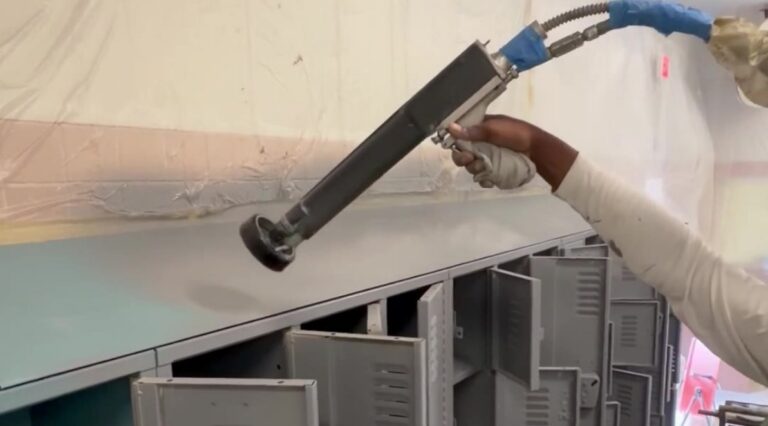
Waterproofing isn’t a single product or a one-time spray. A properly executed waterproofing plan for a Florida HOA property typically addresses several systems working together:
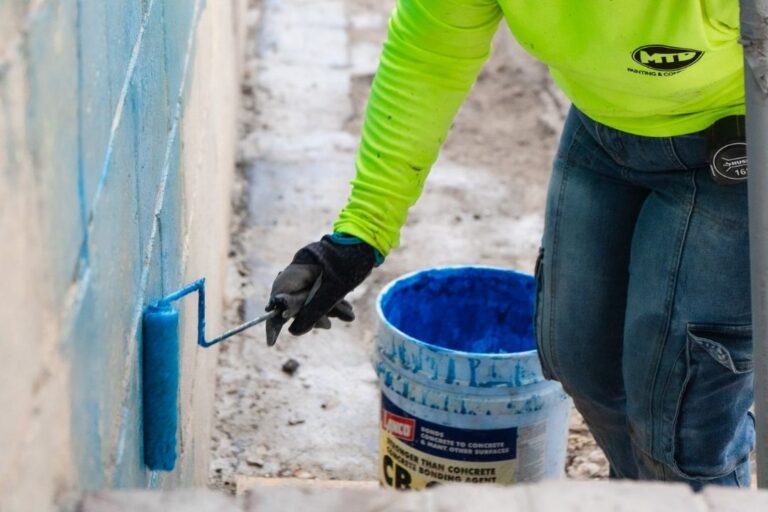
1. Elastomeric and Waterproof Coatings
Applied to exterior walls, these coatings flex with the building's natural expansion and contraction while creating a barrier against wind-driven rain. Not all coatings are rated the same — mil thickness and elongation ratings matter significantly in high-wind zones.
2. Window and Door Sealant Systems
Much of the water intrusion during storms happens at window and door perimeters, not through the wall field itself. Sealant failure becomes common as buildings age and is one of the most overlooked items in routine HOA maintenance.
3. Roof-to-Wall Transitions and Flashing
These junctions take the most punishment during high-wind events. Proper flashing and sealant integration here prevent water from tracking entirely behind the building envelope.
4. Expansion Joint Sealing
Buildings move. Expansion joints that have lost their sealant integrity are a direct pathway for water into the structure and are inexpensive to address compared to the damage they prevent.
Timing: When to Start Before Hurricane Season
The ideal window for waterproofing work in Florida is February through May before the season officially begins and before contractor schedules fill up. Waiting until June or later often means:
- Longer wait times for licensed crews, as demand spikes with the season
- Weather-dependent scheduling delays, since coatings and sealants require dry cure time
- Rushed assessments that may miss secondary vulnerabilities
If your HOA hasn’t scheduled an inspection yet, doing so immediately is still far better than waiting for the first named storm to reveal the property’s weak points.
What HOA Boards Should Ask Before Hiring a Waterproofing Contractor
Because waterproofing failures often don’t show up until the next major storm, it’s critical to vet contractors carefully. Boards should confirm:
- Is the contractor a licensed general contractor in Florida? (Look for a state CGC license, not just a specialty license.)
- Do they carry general liability and workers’ compensation insurance?
- Can they provide references from other HOA or condo association projects in your region?
- What warranty backs the waterproofing system they’re proposing?
- Will they provide a written scope of work identifying every vulnerable point on the property, not just the areas with visible damage?
A reputable contractor will walk the property with your board or management company and document conditions with photos before providing a quote — not just an estimate from a drive-by.
Building Waterproofing Into Your HOA's Reserve Fund Planning
One of the most common reasons HOA properties fall behind on waterproofing isn’t a lack of awareness it’s a lack of planning within the reserve fund. Waterproofing is often treated as a maintenance expense rather than a capital reserve item, which means it competes for funding against more visible priorities like landscaping or amenity upgrades.
Boards that manage this well typically take a few concrete steps:
- Include waterproofing in the reserve study. A qualified reserve study should identify the building envelope and waterproof coatings as components with defined useful lives, not just roofing and paving.
- Budget for phased work. Phasing waterproofing across building sections over 2–3 years can smooth out the financial impact for larger communities while still finishing well ahead of storm season.
- Document existing conditions annually. A photo-based walk-through each spring gives the board a paper trail showing proactive maintenance — useful for both insurance purposes and fiduciary accountability to residents.
- Get ahead of special assessments. Deferred waterproofing is one of the most common reasons HOAs end up needing emergency assessments after a storm.
Post-Storm Inspection: What to Do After Every Hurricane Season Event
Even with proactive waterproofing, every named storm that makes landfall or brushes a property should trigger a post-storm inspection. This isn’t redundant with pre-season prep — it’s how boards catch new vulnerabilities before they become the next season’s emergency.
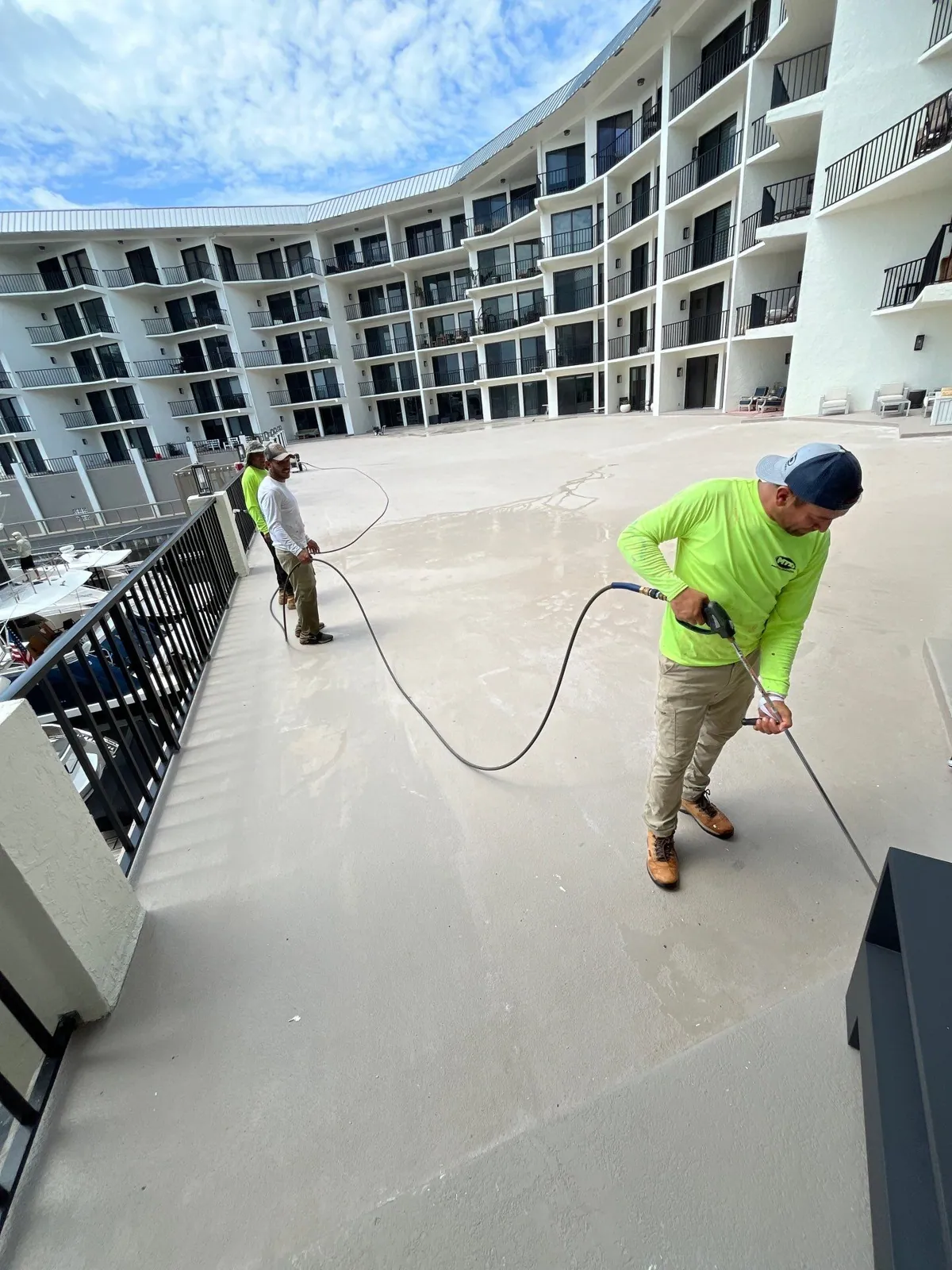
A basic post-storm checklist should include: a visual check of window and door perimeters for new gaps or sealant failure, inspection of roof-to-wall transitions and flashing, a review of balconies and walkways for standing water or new cracking, and an interior walk-through of ground-floor and top-floor units for early signs of moisture intrusion. Catching a small sealant failure after one storm — rather than waiting until the next — is often the difference between a quick fix and a much larger repair down the line.
Frequently Asked Questions
How often should an HOA property be waterproofed in Florida?
Most exterior waterproof coatings need reapplication every 7–10 years, though sealant at windows, doors, and expansion joints should be inspected annually and touched up as needed, especially after any major storm event.
Does waterproofing help with insurance premiums?
While waterproofing itself doesn’t guarantee lower premiums, many insurers view documented preventive maintenance favorably during underwriting and claims review, and it can help avoid claim denials tied to deferred maintenance findings.
Can waterproofing be done while residents are living in the building?
Yes. Exterior waterproofing work is typically completed with minimal disruption to residents, though scheduling and access coordination should be discussed with your contractor and communicated to residents in advance.
What's the difference between waterproofing and regular repainting?
Standard paint provides some water resistance but is not designed to withstand sustained wind-driven rain or hydrostatic pressure. Waterproofing systems use specialized coatings and sealants engineered specifically to block moisture intrusion, often as part of a broader repainting and surface treatment project.
The Bottom Line for Florida HOA Boards
Hurricane season doesn’t wait for board meetings, reserve study approvals, or contractor availability. The HOAs that come through storm season with the least damage and the smallest unplanned expenses are the ones that treated waterproofing as an annual budget priority rather than a reaction to visible damage.
MTD Painting & Construction has been helping HOA and commercial properties across Broward County, Lee County, and Florida prepare for hurricane season for over two decades. If your community hasn’t had a waterproofing assessment this year, now is the time, not after the first tropical storm warning.
Ready to protect your property before hurricane season peaks? Contact MTD Painting & Construction for a full property waterproofing assessment.